What is the first word that comes to your mind when you hear “Hotel room”?
One word, no overthinking. Everyone who answers drops their word into the cloud below — the more people think of it, the bigger it grows.
Write your wordThe cloud, so far
No names, no accounts — just the first word that popped into your head. Say yours and watch the wall grow.
- pillow — 14 answers
- bed — 11 answers
- sleep — 9 answers
- quiet — 8 answers
- towels — 7 answers
- breakfast — 6 answers
- white sheets — 6 answers
- key card — 5 answers
- luggage — 5 answers
- minibar — 4 answers
- shower — 4 answers
- wifi — 4 answers
- window — 4 answers
- check-in — 3 answers
- do not disturb — 3 answers
- night — 3 answers
- one more night — 3 answers
- view — 3 answers
- cozy — 2 answers
- lobby — 2 answers
- no cleaning — 2 answers
- pillowcase — 2 answers
- safe — 2 answers
- silence — 2 answers
- smell — 2 answers
- sun — 2 answers
- tired — 2 answers
- checkout — 1 answer
- city view — 1 answer
- fresh towels — 1 answer
- home — 1 answer
- neighbours — 1 answer
- spare key — 1 answer
- warm — 1 answer

The goal of the prototype is to test:
- the structure of the platform
- the traveller typology
- the Atlas concept
- interactive tools and engagement
- research dissemination
- public engagement
- hospitality case examples
- educational content


Based on the room categories proposed by Lvov, A. (2025) in More than a bed: exploring the diverse roles of the hotel room, this typology identifies the dominant role of hotel rooms within the hospitality experience. It helps analyze how hotel rooms function not only as places to sleep, but also as spaces for sales, experience, efficiency, and integration into the overall stay.
Designed around local history, tradition, and Finnish heritage.
These rooms have individually styled concepts inspired by heritage themes, offering a more distinctive and characterful stay.
Created to provide a memorable and immersive stay, with each room having its own theme and atmosphere.
Focused on practicality, simplicity, and a comfortable everyday stay.
These rooms are designed for guests who value useful features and an uncomplicated experience.
Focused primarily on relaxation, functionality, and a comfortable environment.
Finnish Hotel Room Atlas
🇫🇮 Exploring Finland through its hotel rooms📍One room at a time 🗝️
Remember to share your hotel room experience with FinnishHotelRoomAtlas 👇

Every traveller experiences a hotel room differently. For some, it is a place to rest; for others, it is a workspace, a retreat, or an essential part of the travel experience.
This short questionnaire will help you identify which of the four traveller types best reflects your expectations of a hotel stay.
The test takes approximately 2–3 minutes to complete.
Start the Traveller Test and discover what kind of traveller you are.
They show how different travellers assign meaning to hotel rooms across both leisure and work-related trips, depending on their needs, expectations, and travel purpose.
One key finding is shared by all traveller types:
High-quality sleep is essential in all contexts.
- Comfort seekersDescription:
Comfort Seekers place high importance on the hotel room in both leisure and work-related travel. The room is expected to provide relaxation, recovery, and a high-quality overall experience.
Key expectations:- High-quality sleep
- Comfort and aesthetics
- Calm and relaxing atmosphere
- Well-equipped space
Meaning of the hotel room:
The room is not just a place to stay, but a central part of the travel experience.
Typical behaviour:- Spend time in the room
- Use it for rest and enjoyment
- Value atmosphere and design
Expected benefits:- Recovery and relaxation (both work & leisure)
- Emotional comfort
- Pleasant atmosphere
- Feeling “taken care of”
Design implications:- High sleep quality (beds, acoustics, blackout)
- Warm lighting and materials
- Spatial comfort (not cramped)
- Aesthetic elements (art, textures)
- Moderate TravellersDescription:
Moderate Travellers have balanced expectations. The hotel room is important, but not central — it supports both rest and overall travel activities.
Key expectations:- Comfort + functionality
- Reliable quality
- Flexibility
Meaning of the hotel room:
The room is a supportive environment that complements the trip.
Typical behaviour:- Use the room for both rest and occasional work
- Do not seek strong emotional or aesthetic experience
Expected benefits:- Balanced experience across work & leisure
- Reliable comfort
- No extremes
Design implications:- Consistent quality across elements
- Comfortable but neutral design
- Flexible use (sleep + light work)
- Pragmatic TravellersDescription:
Pragmatic Travellers assign lower importance to the hotel room, especially during work-related trips. The room is primarily a functional necessity.
Key expectations:- Cleanliness
- Efficiency
- Basic functionality
- Good sleep
Meaning of the hotel room:
The room is a practical base, not an experience.
Typical behaviour:- Minimal time spent in the room
- Focus on external activities (work/travel)
- Limited emotional attachment
Expected benefits:- Efficiency and simplicity
- Reliability
- Functional sleep
Design implications:- Clear layout (no confusion)
- Fast processes (check-in, access)
- Functional workspace
- Strong Wi-Fi
- Minimal distractions
- Advantage SeekersDescription:
Advantage Seekers evaluate the hotel room based on the benefits it provides relative to cost, context, or situation. The room is assessed in terms of value and advantages.
Key expectations:- Value for money
- Strategic benefits (location, services)
- Additional features
Meaning of the hotel room:
The room is a resource that provides advantages, not just a space.
Typical behaviour:- Compare options
- Look for added value
- Combine work and leisure strategically
Expected benefits:- Tangible benefits relative to context
- Smart use of money/time
- Strategic advantages (location, features)
Design implications:- Multi-functional furniture
- Included extras (workspace, coffee, amenities)
- Efficient space use
- Clear communication of value
- General publicFor those seeking travel inspiration and cultural insights.
1. Start with the Traveller Test- Take a short test to understand your travel style.
- You’ll identify which type of traveller you are.
- Read about your traveller type and what it means for how you use a hotel room.
- Each type reflects different expectations: comfort, function, balance, or value.
- Go to the Atlas and explore real hotel rooms in Finland that match your profile.
- Each example shows how different rooms create different experiences.
- Explore other traveller types
- Compare different room concepts
- Try the art–hotel matching feature
- Tourism studentsOffering educational resources and research perspectives.
If you are a hospitality or tourism student, you can explore the hotel room through different research methods.
Each method focuses on a different perspective:- travellers
- managers
- staff
- the space itself
- Hospitality professionalsProviding industry-specific data and design inspirations.
Use the framework to:- Understand different guest expectations
- Evaluate your current room offering
- Align room design with target travellers
- ResearchersSupporting academic exploration of hospitality and design.
Use the Atlas to explore how different traveller types assign meaning to hotel rooms and how these meanings are reflected in real-world hotel design.- Analyse the relationship between traveller types and hotel room roles
- Use real hotel cases to connect theory with practice
- Explore how hotel rooms are experienced across travel contexts
- Apply the framework in research, teaching, and case analysis
- Destination management organisationsFor those seeking to promote and understand Finnish hospitality.
- Understand how different traveller types (leisure, work-related, and bleisure) assign value to hotel rooms
- Identify how accommodation contributes to the overall travel experience, not just overnight stays
- Support the development of more targeted and diverse tourism offerings
- Recognise the role of hotel rooms in enhancing destination competitiveness
- Use the framework to inform tourism strategy, especially in experience-driven and sustainable tourism
- Encourage alignment between accommodation supply and evolving traveller expectations
- Promote innovation in hospitality concepts, including design, functionality, and cultural elements
- Use case examples from Finland to support benchmarking and policy development
A Curated Research Library
For students & researchers
studying the hospitality world.
Atlas Research Bookshelf gathers books, papers, essays and field notes that map the hotel room and what happens inside it.
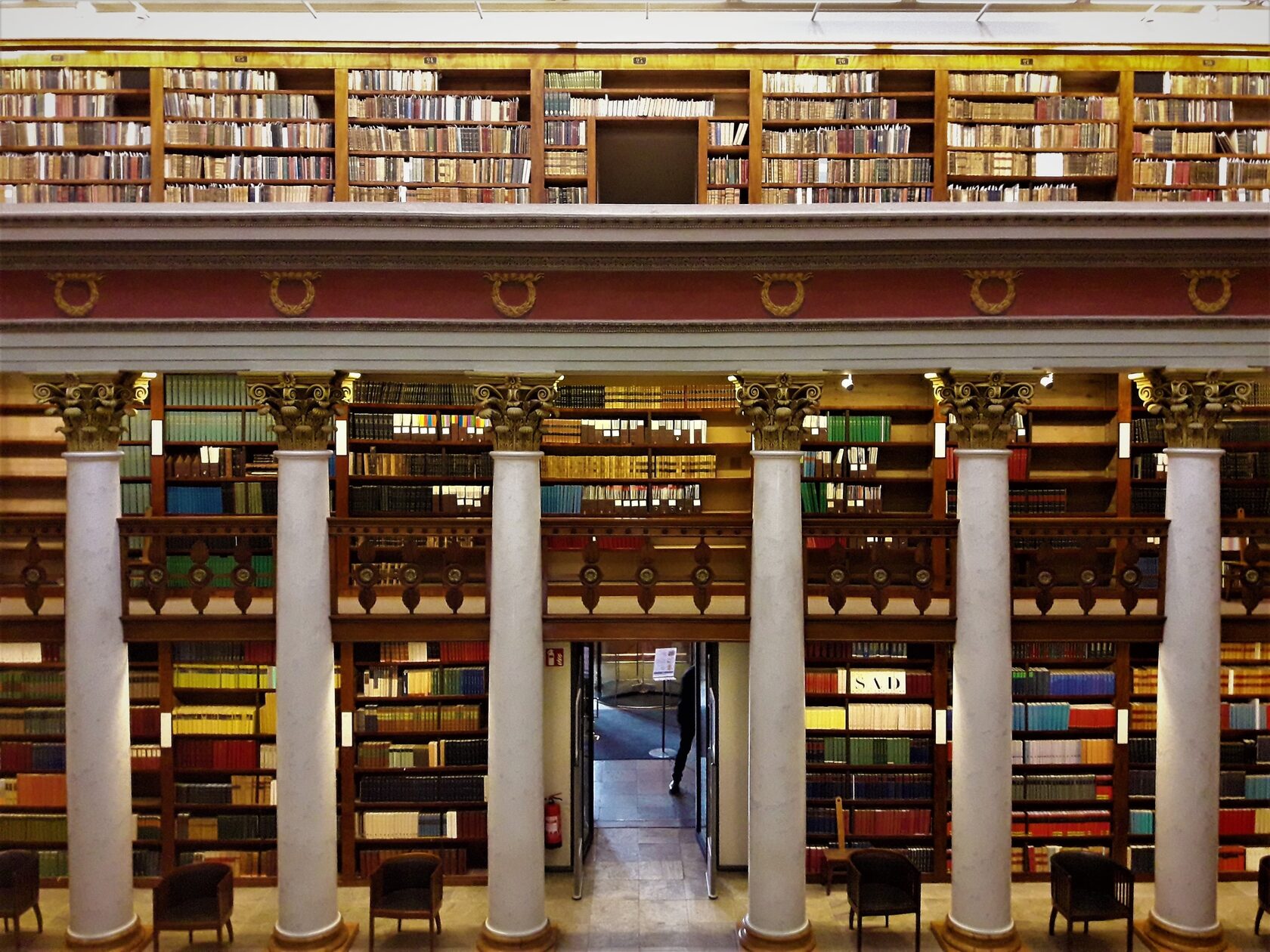
The platform translates academic research into accessible and interactive formats for travellers, students, hospitality professionals, researchers, and tourism stakeholders.
European Journal of Tourism Research, 36, 3609.
DOI: 10.54055/ejtr.v36i.3158
This study examines how hotel managers perceive the role of hotel rooms within hospitality experiences and hotel business operations. The findings highlight the importance of traveller expectations, overnight stay experiences, and the role of hotel rooms as the core element of accommodation services.
Matkailututkimus, 21(1), 15–22.
This conceptual article examines hotel rooms beyond their traditional accommodation function and discusses their experiential, emotional, functional, and cultural meanings within tourism and hospitality contexts.
European Journal of Tourism Research, 41, 4111.
DOI: 10.54055/ejtr.v41i.4049
This study explores how different traveller types perceive hotel rooms in leisure and work-related travel contexts and identifies four traveller types: Comfort Seekers, Pragmatic Travellers, Moderate Travellers, and Advantage Seekers.
Lvov, A. (2026). “What Is a Hotel Room?” Poster presentation. Tourism Management and Computing Technologies International Conference, Portimão, Portugal, 2–6 November 2026.
Lvov, A. (2026). Finnish Hotel Room Atlas as a Digital Platform for Research Communication in the Hospitality Ecosystem. Presentation at the 14th International Research Symposium in Service Management (IRSSM-14), Turkey. https://irssm14.ankara.edu.tr/symposium-program/
Lvov, A. (2026). From Accommodation to Attraction: Hotels as Cultural Spaces in Finnish Tourism. Presentation delivered at the Tourism & Arts Webinar, Escola Superior de Gestão, Hotelaria e Turismo (ESGHT), Universidade do Algarve, Portugal, 8 June 2026 https://dspace.ankara.edu.tr/server/api/core/bitstreams/42dfa5c9-3844-4f6b-a01e-ee6b03af8c4d/content
Lvov, A. (2026). Transforming the hotel room from space to experience. Presentation at the XV Symposium of Finnish Tourism and Leisure Research: “The Experience Economy revisited: Towards meaningful, sustainable and transformative value in tourism and leisure”, Tampere University, Finland, 28–29 April 2026.
Lvov, A. (2026). Why Attend Scientific Conferences and Events? Matkailukoulutus Blog. https://matkailukoulutus.blogspot.com/2026/05/why-attend-scientific-conferences-and.html
Lvov, A. (2025, September). Hotel room perceptions: Shaping the traveller experience. Paper presented at the 33rd Nordic Symposium on Tourism and Hospitality Research, Bornholm, Denmark. In Book of abstracts. https://medialib.cmcdn.dk/medialibrary/6D94E72E-5BD4-4631-ACEB-37554B6375DF/F4B8C97E-B488-F011-84D5-00155D0B0940.pdf
Lvov, A. (2024, September). Benefits expected from the overnight stay in the hotel room. Paper presented at the 32nd Nordic Symposium on Tourism and Hospitality Research, Stavanger, Norway. In Book of abstracts. https://www.aaudxp-cms.aau.dk/media/z05fbvhu/northors-2024-book-of-abstracts.pdf
Lvov, A. (2024, May). Customer experiences of a hotel room within travelling. Paper presented at the XIV Symposium of Finnish Tourism and Leisure Research, 20 Years of Tourism and Leisure Research in Finland: The Way Forward. In Book of abstracts. https://bin.yhdistysavain.fi/1607025/fhpWwjXQP4LF8t9tifLg0aHj3D/2024_BOOK_of_ABSTRACTS.pdf
Lvov, A. (2023, September). Role of the guestroom within a travel experience. Paper presented at the 31st Nordic Symposium on Tourism and Hospitality Research, Östersund, Sweden. In Book of abstracts. https://www.miun.se/globalassets/forskning/center-och-institut/etour/konferens/nordic-symposium-2023/nordic-symposium---book-of-abstracts--final-web.pdf
Lvov, A. (2022, September). Hotel managers’ perspective to the core service of the hotel. Paper presented at the 30th Nordic Symposium on Tourism and Hospitality Research, Porvoo, Finland. In Book of abstracts https://acrobat.adobe.com/link/review?uri=urn%3Aaaid%3Ascds%3AUS%3A2302b40d-19cc-344c-b7ec-b0b0d452290e
Interested in the research, collaboration opportunities, or the Finnish Hotel Room Atlas project?
The platform is part of ongoing doctoral research exploring hotel rooms as experiential, cultural, and functional spaces within tourism and hospitality. The project welcomes dialogue with researchers, students, hospitality professionals, hotels, and tourism stakeholders.
If you would like to:
- discuss the research,
- collaborate,
- contribute hotel examples or experiences,
- invite presentations or workshops,
- or learn more about the project,
- please get in touch.
alvov@student.uef.fi
